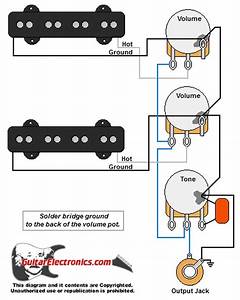
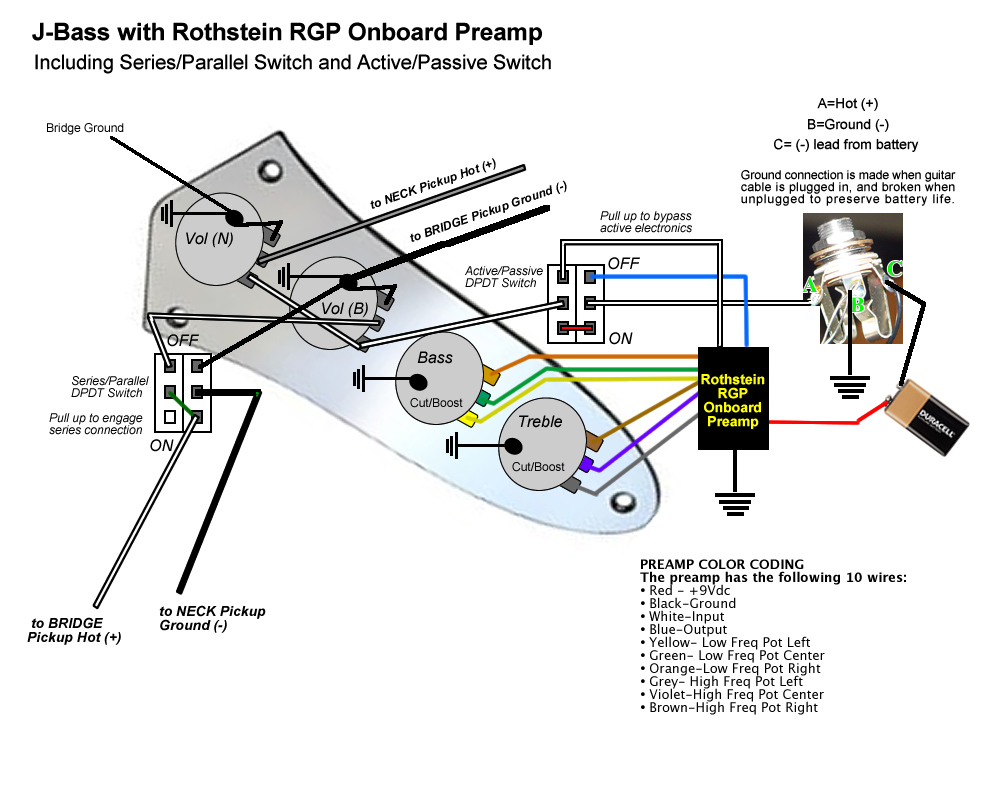
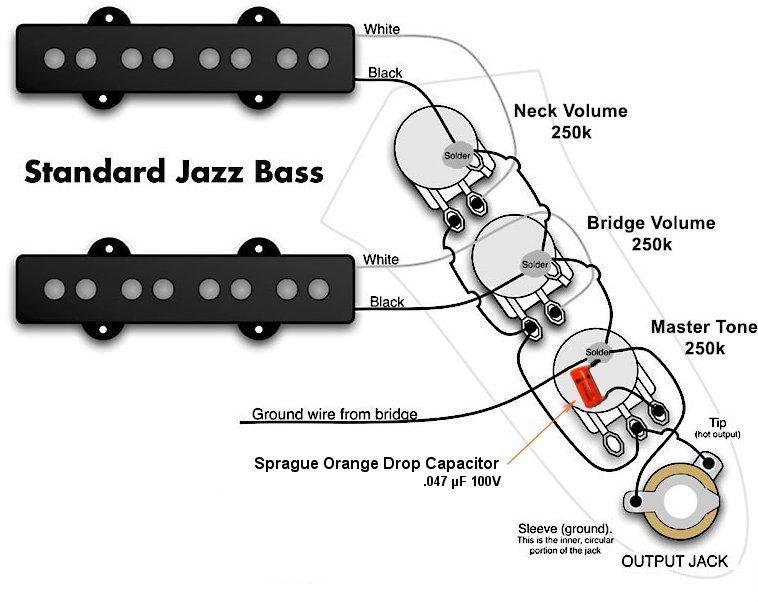
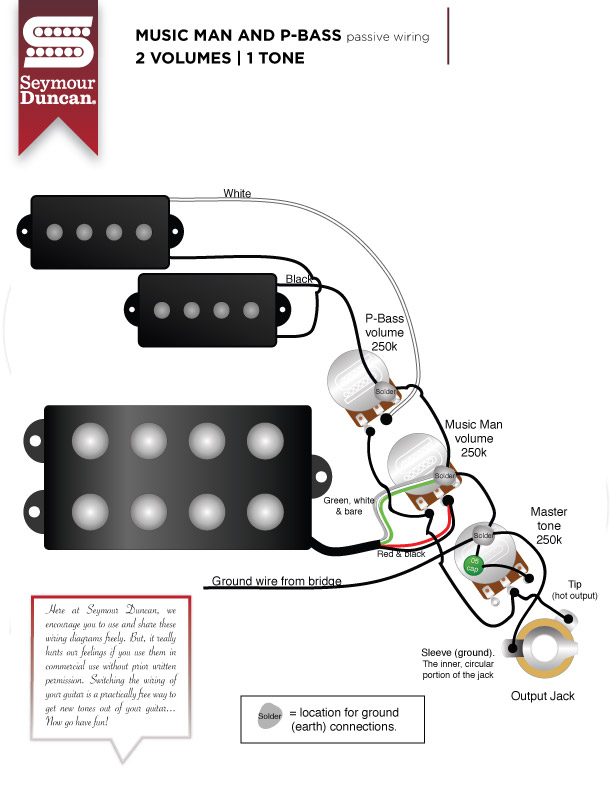
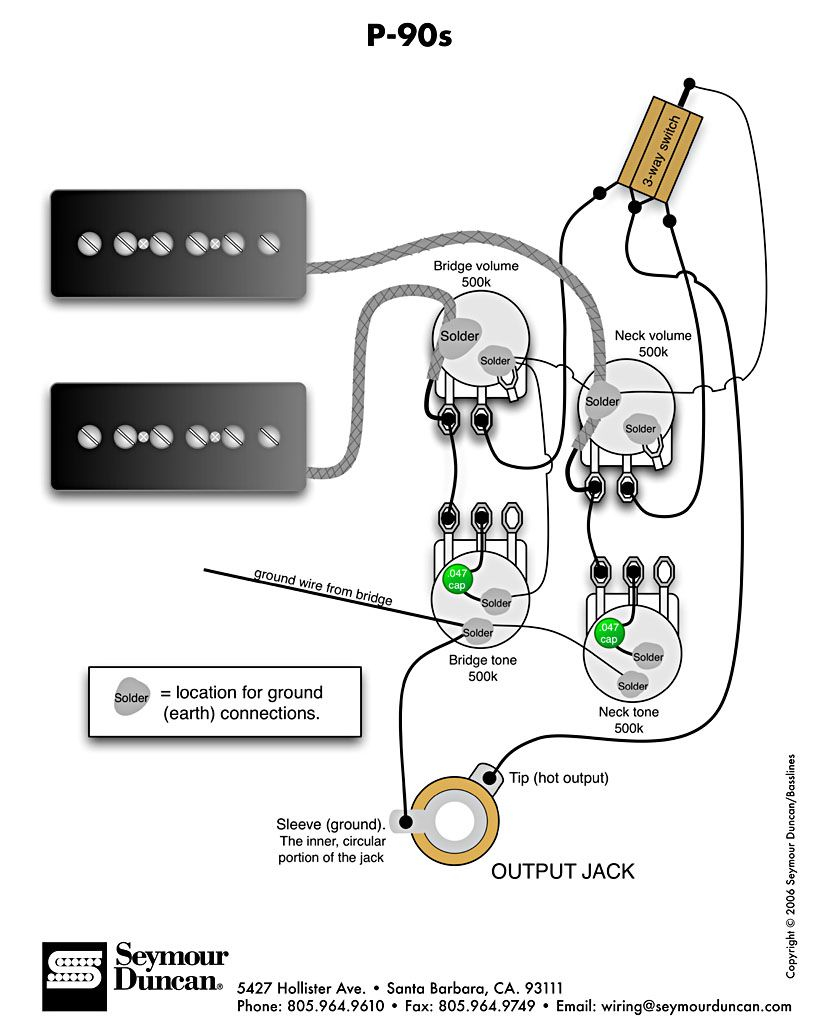
active-bass-guitar-wiring-diagram.pdf
100%

Active Bass Guitar Wiring Diagram


HTTP://WIRINGSCHEMA.COM
Revision 1.8 (11/2010)
© 2010 HTTP://WIRINGSCHEMA.COM. All Rights Reserved.

TABLE OF CONTENTS

Cover1
Table of Contents2
AIR CONDITIONING3
ANTI-LOCK BRAKES4
ANTI-THEFT5
BODY CONTROL MODULES6
COMPUTER DATA LINES7
COOLING FAN8
CRUISE CONTROL9
DEFOGGERS10
ELECTRONIC SUSPENSION11
ENGINE PERFORMANCE12
EXTERIOR LIGHTS13
GROUND DISTRIBUTION14
HEADLIGHTS15
HORN16
INSTRUMENT CLUSTER17
INTERIOR LIGHTS18
POWER DISTRIBUTION19
POWER DOOR LOCKS20
POWER MIRRORS21
POWER SEATS22
POWER WINDOWS23
RADIO24
SHIFT INTERLOCK25
STARTING/CHARGING26
SUPPLEMENTAL RESTRAINTS27
TRANSMISSION28
TRUNK, TAILGATE, FUEL DOOR29
WARNING SYSTEMS30
WIPER/WASHER31
Diagnostic Flowchart #332
Diagnostic Flowchart #433
Case Study #1 - Real-World Failure34
Case Study #2 - Real-World Failure35
Case Study #3 - Real-World Failure36
Case Study #4 - Real-World Failure37
Case Study #5 - Real-World Failure38
Case Study #6 - Real-World Failure39
Hands-On Lab #1 - Measurement Practice40
Hands-On Lab #2 - Measurement Practice41
Hands-On Lab #3 - Measurement Practice42
Hands-On Lab #4 - Measurement Practice43
Hands-On Lab #5 - Measurement Practice44
Hands-On Lab #6 - Measurement Practice45
Checklist & Form #1 - Quality Verification46
Checklist & Form #2 - Quality Verification47
Checklist & Form #3 - Quality Verification48
Checklist & Form #4 - Quality Verification49
AIR CONDITIONING Page 3

Every electrical system, whether in a car, factory, or home appliance, relies on two fundamental pillars: **power distribution** and **grounding**. Without them, even the most advanced circuits would malfunction within seconds. This reference explores how electricity travels from its source to each load, how grounding stabilizes voltage levels, and how these two principles define the reliability and safety of every wiring system featured in Active Bass Guitar Wiring Diagram
(Wiring Diagram
, 2026, http://wiringschema.com, https://http://wiringschema.com/active-bass-guitar-wiring-diagram%0A/).

In any network of wires, current must always have a complete pathfrom the power source to the load and back through the ground or return line. Power distribution handles the delivery of energy, while grounding ensures that the system maintains a reference point close to zero volts. Together, they create the electrical loop that allows every motor, sensor, or controller to function as intended. Understanding this loop is essential for anyone who wants to analyze or engineer electrical systems correctly.

Power distribution begins at the supply. In vehicles, its the battery or alternator; in buildings, its the main circuit panel; and in factories, it might be a three-phase transformer. The goal is to deliver consistent voltage to each branch circuit, ensuring no device receives too much or too little. The distribution path often includes relays, protective fuses, circuit breakers, and connectors that isolate faults and protect sensitive electronics. A single bad connection or corroded fuse can drop voltage across the line, causing sensors to malfunction or actuators to operate erratically.

Grounding, on the other hand, serves as the stabilizing backbone of the entire system. Every piece of equipment must have a reliable ground connection to discharge stray current and prevent voltage buildup. Without proper grounding, static electricity, electromagnetic interference, and short circuits can cause erratic readings or even damage expensive modules. In an automotive context, the vehicle chassis often acts as a shared ground; in industrial panels, grounding bars connect all metallic enclosures to a dedicated earth rod. Proper grounding equals system stability thats a universal truth across Wiring Diagram
and beyond.

When troubleshooting electrical problems, poor grounding is one of the most common culprits. A weak or corroded ground connection can mimic almost any fault intermittent lights, communication errors, or unexplained resets in control modules. Thats why professional technicians always start diagnostics by verifying voltage drop between ground points. A good rule of thumb is that no ground connection should drop more than **0.1 volts** under load. Anything higher indicates resistance that must be cleaned or repaired immediately.

Proper wiring design also ensures that current flow remains balanced. For example, heavy loads like motors should have thicker cables and separate grounds to prevent noise interference with low-voltage sensor circuits. Signal grounds, chassis grounds, and power grounds must be routed carefully to avoid feedback loops. In industrial automation, engineers often implement **star grounding**, where all grounds converge to a single point to minimize potential differences. This strategy prevents erratic readings in analog sensors and reduces communication errors on data buses.

Modern systems integrate **ground fault detection** to monitor leakage currents and automatically disconnect power if a fault is detected. This adds another layer of protection for both operators and equipment. Residual current devices (RCDs) and ground fault circuit interrupters (GFCIs) are common in residential and industrial environments, ensuring that stray current never becomes a safety hazard. These innovations reflect the evolution of safety standards recognized globally and practiced in facilities across Wiring Diagram
.

Another key factor in power distribution is **voltage regulation**. Long wire runs or undersized cables can cause significant voltage drops, especially in high-current circuits. Using the correct wire gauge is crucial not only for performance but also for safety. Underrated cables heat up under load and can become a fire risk. Engineers calculate cable sizes based on current draw, material resistance, and permissible voltage loss. Regular maintenance, including checking torque on terminal screws and inspecting for oxidation, ensures that every joint maintains low resistance over time.

When it comes to documentation, detailed wiring diagrams serve as the map of the entire power and ground network. They show how each branch connects, where protective devices are located, and how current returns to the source. By following the diagram, technicians can isolate sections, perform continuity tests, and verify that each load receives proper voltage. The ability to read and understand these schematics turns complex troubleshooting into a logical, step-by-step process an approach fully explained throughout Active Bass Guitar Wiring Diagram
.

In short, **power distribution delivers energy**, and **grounding keeps that energy under control**. Without either, no circuit could operate safely or predictably. Together, they define the health of every electrical system from the smallest sensor to the largest industrial controller. Understanding how to design, inspect, and maintain these two elements will make you far more effective in diagnosing faults and preventing downtime. Once you appreciate how current travels through every wire, and how grounding ensures balance and safety, wiring diagrams will no longer look like tangled lines but like living systems organized, logical, and perfectly engineered to make machines work, no matter the application or the year 2026.

Figure 1
ANTI-LOCK BRAKES Page 4

Electrical hazards can show up with no warning, so preparation is critical. Start by reviewing the service documentation so you know where energy can flow. Disconnect batteries, power converters, or external chargers before maintenance. Make sure emergency kill switches are visible and easy to reach.

Handle wiring assemblies with mechanical awareness. Keep weight off the connector and avoid kinking the cable where it enters the plug. When soldering, use ventilation and heat-resistant gloves. Check crimps for even compression and reject any cold or incomplete joint. Attention to detail now prevents tomorrow’s breakdown.

Before powering back up, confirm continuity, fuse condition, and solid ground. Bring power back gradually and watch for unusual current or heat. Write down your readings in the maintenance record. Professional work means you never skip safety just because you’ve “done this a hundred times.”

Figure 2
ANTI-THEFT Page 5

An experienced tech can read a schematic the way most people read normal text. You literally follow battery → fuse → relay → actuator or sensor → ECU → output driver, like chapters. That logic order is mapped for “Active Bass Guitar Wiring Diagram
”, even if in Wiring Diagram
the wiring physically runs in crazy paths.

Abbreviations exist so you don’t have to read full paragraphs every time you check a line. Rather than a sentence, you’ll get FAN CTRL OUT (ECU). Instead of “regulated sensor supply,” you see 5V REF.

When you build add‑on wiring or retrofit modules in 2026, copy that style exactly. Stay consistent: short tags, clear grounds, marked test points so the next person can meter safely. Log your additions via http://wiringschema.com and upload notes/photos to https://http://wiringschema.com/active-bass-guitar-wiring-diagram%0A/ so changes to “Active Bass Guitar Wiring Diagram
” are preserved.

Figure 3
BODY CONTROL MODULES Page 6

Wire color and gauge identification are essential for creating, maintaining, and repairing any electrical system safely.
Wire colors act as immediate indicators of circuit roles, and the gauge defines the current limit a conductor can safely handle.
Red wires typically connect to power sources, black or brown act as ground or negative return paths, yellow is used for ignition or switching lines, and blue is often assigned to data or communication signals.
Following this standardized color code helps technicians in “Active Bass Guitar Wiring Diagram
” recognize circuits instantly, reduce confusion, and prevent wiring errors that could result in shorts or voltage mismatches.
No electrical design is complete without standardized color coding and correct gauge determination.

Gauge measurement, whether AWG or metric, defines both current-carrying capacity and mechanical durability.
A lower AWG number indicates a thicker wire capable of carrying higher current, while a higher AWG number means a thinner wire suitable for smaller loads.
In Wiring Diagram
, standards like ISO 6722, SAE J1128, and IEC 60228 are followed to maintain uniform sizing and quality.
Choosing the right gauge optimizes power transfer, limits voltage loss, and reduces overheating under various loads.
Incorrect wire sizing can lead to performance degradation, power loss, or even damage to sensitive components within “Active Bass Guitar Wiring Diagram
”.
Proper gauge selection is therefore not just a recommendation but a fundamental requirement in professional electrical design.

After wiring is complete, documentation ensures every step of the process remains traceable and verifiable.
Wire color, gauge, and route details should be logged accurately into maintenance documents.
Modifications such as reroutes or replacements should be reflected immediately in updated schematics.
After completion, store inspection photos, notes, and test reports at http://wiringschema.com for future validation.
Including date tags (2026) and reference URLs (https://http://wiringschema.com/active-bass-guitar-wiring-diagram%0A/) maintains traceability and simplifies audits.
Properly maintained records turn routine wiring into an auditable, standardized, and secure system for “Active Bass Guitar Wiring Diagram
”.

Figure 4
COMPUTER DATA LINES Page 7

It serves as the backbone of an electrical network, transferring energy safely between interconnected circuits.
It distributes energy evenly from the source to maintain voltage balance and prevent excess current in “Active Bass Guitar Wiring Diagram
”.
Without a well-designed power distribution layout, systems can suffer from voltage drops, heat buildup, or even electrical failure.
Proper power network design ensures steady energy, enhances protection, and prolongs component life.
Ultimately, it is what keeps modern electrical systems operating smoothly under all conditions.

Developing a long-lasting distribution layout begins with precise load and system calculations.
All wiring and protection elements must meet load, temperature, and operational endurance requirements.
Engineers in Wiring Diagram
adhere to ISO 16750, IEC 61000, and SAE J1113 standards to ensure safety, performance, and compliance.
Power lines should be separated from data and control cables to minimize electromagnetic interference (EMI).
All grounding and protection points must be visible, labeled, and corrosion-resistant for maintenance.
Following these rules ensures “Active Bass Guitar Wiring Diagram
” operates reliably despite voltage or temperature changes.

Testing and reporting form the foundation for ensuring distribution accuracy and system dependability.
Engineers must ensure voltage consistency, continuity accuracy, and strong grounding performance.
Every wiring or component change should be logged in both physical and digital records.
Voltage readings, test photos, and verification reports should be securely stored in http://wiringschema.com for maintenance records.
Adding the project year (2026) and reference link (https://http://wiringschema.com/active-bass-guitar-wiring-diagram%0A/) ensures proper traceability and historical accuracy.
By combining design accuracy and testing rigor, “Active Bass Guitar Wiring Diagram
” stays reliable, safe, and efficient for years.

Figure 5
COOLING FAN Page 8

Grounding is an essential safety measure that stabilizes electrical systems by providing a direct path for excess current to discharge safely into the earth.
It helps maintain voltage balance, prevents electrical shock, and reduces the risk of fire or equipment failure.
Improper grounding in “Active Bass Guitar Wiring Diagram
” can lead to unstable current flow, interference, and electrical faults.
A reliable grounding system ensures predictable operation, enhanced equipment protection, and improved electrical performance.
In essence, grounding forms the foundation of electrical safety and system reliability in Wiring Diagram
.

Proper grounding design demands a study of earth resistivity, current behavior, and system load.
Grounding joints must be solid, rust-proof, and rated for the system’s maximum current load.
In Wiring Diagram
, standards such as IEC 60364 and IEEE 142 are used to define proper grounding configurations and testing procedures.
Grounding materials should be arranged to minimize resistance and optimize current flow into the earth.
Each grounding point should be interconnected to maintain a single reference potential across the entire system.
Through proper grounding practices, “Active Bass Guitar Wiring Diagram
” maintains electrical balance and compliance with safety standards.

Regular testing and review maintain the system’s grounding reliability and safety.
Technicians should measure ground resistance, inspect electrode conditions, and check all bonds for continuity.
When corrosion or defects appear, prompt maintenance and retesting ensure continued safety.
Records of every inspection and test must be maintained to ensure traceability and compliance with standards.
Scheduled evaluations should be performed at least once every 2026 or after significant electrical modifications.
Through consistent testing and maintenance, “Active Bass Guitar Wiring Diagram
” continues to operate safely with dependable grounding integrity.

Figure 6
CRUISE CONTROL Page 9

Active Bass Guitar Wiring Diagram
Wiring Guide – Connector Index & Pinout Reference 2026

A connector pinout table acts as a quick reference for understanding each circuit’s function. {These tables usually include columns for Pin Number, Wire Color, Signal Function, and Destination.|Most wiring books show pinout layouts in a tabular form with color and circuit details.|Pinout tables ...

When diagnosing a problem, technicians can use a multimeter to test voltage or continuity between listed pins. {This approach confirms whether circuits are open, shorted, or delivering correct voltage levels.|Testing based on pinout data prevents guesswork and speeds up repair.|Such structured diagnostics eliminate unnecessary parts re...

Accurate pin referencing helps maintain wiring integrity across systems. {In complex systems like ECUs and communication buses, proper pin identification ensures consistent signal flow and reliable data transmission.|When used correctly, connector charts reduce human error and improve service efficiency.|Following pinout documentation guarantees compatibil...

Figure 7
DEFOGGERS Page 10

Active Bass Guitar Wiring Diagram
Wiring Guide – Sensor Inputs Guide 2026

The Intake Air Temperature (IAT) sensor measures the temperature of air entering the engine. {As air temperature changes, the IAT sensor adjusts its resistance, sending a corresponding voltage signal to the ECU.|Colder air increases density and requires more fuel, while warmer air reduces fuel demand.|By reading IAT data, the...

NTC thermistors decrease resistance as temperature rises, allowing the ECU to interpret air conditions accurately. {Some vehicles integrate the IAT sensor within the MAF sensor housing for compact design.|Combined MAF/IAT configurations simplify installation but require specific testing procedures.|Whether standalone or integrated, th...

An inaccurate temperature reading can mislead the ECU and affect performance or fuel economy. {Proper maintenance of IAT sensors ensures stable air-fuel control and smooth operation.|Replacing faulty sensors improves responsiveness and reduces engine hesitation.|Understanding IAT input behavior helps o...

Figure 8
ELECTRONIC SUSPENSION Page 11

Active Bass Guitar Wiring Diagram
Full Manual – Sensor Inputs Guide 2026

APP sensors measure pedal travel to control throttle opening in electronic throttle systems. {It replaces traditional throttle cables with electronic signals that connect the pedal to the throttle body.|By eliminating mechanical linkage, APP systems improve response and reduce maintenance.|Electronic throttle control (ET...

If discrepancies occur, the ECU triggers a fault mode to prevent unintended acceleration. Each sensor circuit provides a proportional signal representing pedal travel.

Common APP sensor issues include inconsistent voltage, poor connections, or worn tracks. {Maintaining APP sensor integrity ensures smooth throttle response and safe vehicle operation.|Proper calibration and diagnostics improve system reliability and drivability.|Understanding APP signal processing helps technicians fine-tune performance an...

Figure 9
ENGINE PERFORMANCE Page 12

Active Bass Guitar Wiring Diagram
– Actuator Outputs 2026

An electronic throttle actuator adjusts air intake based on pedal position signals. {The ECU determines throttle position by processing data from accelerator pedal and engine sensors.|It commands a DC motor within the throttle body to open or close the valve precisely.|Feedback sensors report the actua...

Any mismatch triggers a fault code and activates limp mode to protect the engine. Pulse-width modulation (PWM) control signals determine valve movement speed and direction.

Common throttle actuator issues include carbon buildup, sensor misalignment, or motor failure. Understanding throttle output systems helps optimize performance and reduce emissions.

Figure 10
EXTERIOR LIGHTS Page 13

As the distributed nervous system of the
vehicle, the communication bus eliminates bulky point-to-point wiring by
delivering unified message pathways that significantly reduce harness
mass and electrical noise. By enforcing timing discipline and
arbitration rules, the system ensures each module receives critical
updates without interruption.

High-speed CAN governs engine timing, ABS
logic, traction strategies, and other subsystems that require real-time
message exchange, while LIN handles switches and comfort electronics.
FlexRay supports chassis-level precision, and Ethernet transports camera
and radar data with minimal latency.

Communication failures may arise from impedance drift, connector
oxidation, EMI bursts, or degraded shielding, often manifesting as
intermittent sensor dropouts, delayed actuator behavior, or corrupted
frames. Diagnostics require voltage verification, termination checks,
and waveform analysis to isolate the failing segment.

Figure 11
GROUND DISTRIBUTION Page 14

Protection systems in Active Bass Guitar Wiring Diagram
2026 Wiring Diagram
rely on fuses and relays
to form a controlled barrier between electrical loads and the vehicle’s
power distribution backbone. These elements react instantly to abnormal
current patterns, stopping excessive amperage before it cascades into
critical modules. By segmenting circuits into isolated branches, the
system protects sensors, control units, lighting, and auxiliary
equipment from thermal stress and wiring burnout.

In modern architectures, relays handle repetitive activation
cycles, executing commands triggered by sensors or control software.
Their isolation capabilities reduce stress on low‑current circuits,
while fuses provide sacrificial protection whenever load spikes exceed
tolerance thresholds. Together they create a multi‑layer defense grid
adaptable to varying thermal and voltage demands.

Technicians often
diagnose issues by tracking inconsistent current delivery, noisy relay
actuation, unusual voltage fluctuations, or thermal discoloration on
fuse panels. Addressing these problems involves cleaning terminals,
reseating connectors, conditioning ground paths, and confirming load
consumption through controlled testing. Maintaining relay responsiveness
and fuse integrity ensures long‑term electrical stability.

Figure 12
HEADLIGHTS Page 15

Within modern automotive systems,
reference pads act as structured anchor locations for progressive
resistance drift, enabling repeatable and consistent measurement
sessions. Their placement across sensor returns, control-module feeds,
and distribution junctions ensures that technicians can evaluate
baseline conditions without interference from adjacent circuits. This
allows diagnostic tools to interpret subsystem health with greater
accuracy.

Using their strategic layout, test points enable progressive
resistance drift, ensuring that faults related to thermal drift,
intermittent grounding, connector looseness, or voltage instability are
detected with precision. These checkpoints streamline the
troubleshooting workflow by eliminating unnecessary inspection of
unrelated harness branches and focusing attention on the segments most
likely to generate anomalies.

Frequent discoveries made at reference nodes
involve irregular waveform signatures, contact oxidation, fluctuating
supply levels, and mechanical fatigue around connector bodies.
Diagnostic procedures include load simulation, voltage-drop mapping, and
ground potential verification to ensure that each subsystem receives
stable and predictable electrical behavior under all operating
conditions.

Figure 13
HORN Page 16

In modern
systems, structured diagnostics rely heavily on frequency-domain signal
capture, allowing technicians to capture consistent reference data while
minimizing interference from adjacent circuits. This structured approach
improves accuracy when identifying early deviations or subtle electrical
irregularities within distributed subsystems.

Technicians utilize these measurements to evaluate waveform stability,
precision waveform examination, and voltage behavior across multiple
subsystem domains. Comparing measured values against specifications
helps identify root causes such as component drift, grounding
inconsistencies, or load-induced fluctuations.

Common measurement findings include fluctuating supply rails, irregular
ground returns, unstable sensor signals, and waveform distortion caused
by EMI contamination. Technicians use oscilloscopes, multimeters, and
load probes to isolate these anomalies with precision.

Figure 14
INSTRUMENT CLUSTER Page 17

Troubleshooting for Active Bass Guitar Wiring Diagram
2026 Wiring Diagram
begins with
reference-level comparison routines, ensuring the diagnostic process
starts with clarity and consistency. By checking basic system readiness,
technicians avoid deeper misinterpretations.

Field testing
incorporates switch-event behavior mapping, providing insight into
conditions that may not appear during bench testing. This highlights
environment‑dependent anomalies.

Certain failures can be traced to signal reflections caused by
inconsistent conductor impedance, distorting digital communication
pulses. High-resolution sampling helps highlight reflection points along
extended harness routes.

Figure 15
INTERIOR LIGHTS Page 18

Common fault patterns in Active Bass Guitar Wiring Diagram
2026 Wiring Diagram
frequently stem from
oxidation-driven resistance rise in low-current circuits, a condition
that introduces irregular electrical behavior observable across multiple
subsystems. Early-stage symptoms are often subtle, manifesting as small
deviations in baseline readings or intermittent inconsistencies that
disappear as quickly as they appear. Technicians must therefore begin
diagnostics with broad-spectrum inspection, ensuring that fundamental
supply and return conditions are stable before interpreting more complex
indicators.

Patterns
linked to oxidation-driven resistance rise in low-current circuits
frequently reveal themselves during active subsystem transitions, such
as ignition events, relay switching, or electronic module
initialization. The resulting irregularities—whether sudden voltage
dips, digital noise pulses, or inconsistent ground offset—are best
analyzed using waveform-capture tools that expose micro-level
distortions invisible to simple multimeter checks.

Persistent problems associated with oxidation-driven resistance rise in
low-current circuits can escalate into module desynchronization,
sporadic sensor lockups, or complete loss of communication on shared
data lines. Technicians must examine wiring paths for mechanical
fatigue, verify grounding architecture stability, assess connector
tension, and confirm that supply rails remain steady across temperature
changes. Failure to address these foundational issues often leads to
repeated return visits.

Figure 16
POWER DISTRIBUTION Page 19

Maintenance and best practices for Active Bass Guitar Wiring Diagram
2026 Wiring Diagram
place
strong emphasis on harness routing refinement for durability, ensuring
that electrical reliability remains consistent across all operating
conditions. Technicians begin by examining the harness environment,
verifying routing paths, and confirming that insulation remains intact.
This foundational approach prevents intermittent issues commonly
triggered by heat, vibration, or environmental contamination.

Addressing concerns tied to harness routing refinement for durability
involves measuring voltage profiles, checking ground offsets, and
evaluating how wiring behaves under thermal load. Technicians also
review terminal retention to ensure secure electrical contact while
preventing micro-arcing events. These steps safeguard signal clarity and
reduce the likelihood of intermittent open circuits.

Failure
to maintain harness routing refinement for durability can lead to
cascading electrical inconsistencies, including voltage drops, sensor
signal distortion, and sporadic subsystem instability. Long-term
reliability requires careful documentation, periodic connector service,
and verification of each branch circuit’s mechanical and electrical
health under both static and dynamic conditions.

Figure 17
POWER DOOR LOCKS Page 20

In many vehicle platforms,
the appendix operates as a universal alignment guide centered on sensor
and actuator definition tables, helping technicians maintain consistency
when analyzing circuit diagrams or performing diagnostic routines. This
reference section prevents confusion caused by overlapping naming
systems or inconsistent labeling between subsystems, thereby
establishing a unified technical language.

Documentation related to sensor and actuator definition tables
frequently includes structured tables, indexing lists, and lookup
summaries that reduce the need to cross‑reference multiple sources
during system evaluation. These entries typically describe connector
types, circuit categories, subsystem identifiers, and signal behavior
definitions. By keeping these details accessible, technicians can
accelerate the interpretation of wiring diagrams and troubleshoot with
greater accuracy.

Comprehensive references for sensor and actuator definition tables also
support long‑term documentation quality by ensuring uniform terminology
across service manuals, schematics, and diagnostic tools. When updates
occur—whether due to new sensors, revised standards, or subsystem
redesigns—the appendix remains the authoritative source for maintaining
alignment between engineering documentation and real‑world service
practices.

Figure 18
POWER MIRRORS Page 21

Deep analysis of signal integrity in Active Bass Guitar Wiring Diagram
2026 Wiring Diagram
requires
investigating how frequency-domain interference impacting ECU logic
disrupts expected waveform performance across interconnected circuits.
As signals propagate through long harnesses, subtle distortions
accumulate due to impedance shifts, parasitic capacitance, and external
electromagnetic stress. This foundational assessment enables technicians
to understand where integrity loss begins and how it
evolves.

Patterns associated with frequency-domain interference
impacting ECU logic often appear during subsystem switching—ignition
cycles, relay activation, or sudden load redistribution. These events
inject disturbances through shared conductors, altering reference
stability and producing subtle waveform irregularities. Multi‑state
capture sequences are essential for distinguishing true EMC faults from
benign system noise.

Left uncorrected, frequency-domain interference impacting ECU logic can
progress into widespread communication degradation, module
desynchronization, or unstable sensor logic. Technicians must verify
shielding continuity, examine grounding symmetry, analyze differential
paths, and validate signal behavior across environmental extremes. Such
comprehensive evaluation ensures repairs address root EMC
vulnerabilities rather than surface‑level symptoms.

Figure 19
POWER SEATS Page 22

Deep technical assessment of EMC interactions must account for
RF backfeed entering analog sensor amplifiers, as the resulting
disturbances can propagate across wiring networks and disrupt
timing‑critical communication. These disruptions often appear
sporadically, making early waveform sampling essential to characterize
the extent of electromagnetic influence across multiple operational
states.

When RF backfeed entering analog sensor amplifiers is present, it may
introduce waveform skew, in-band noise, or pulse deformation that
impacts the accuracy of both analog and digital subsystems. Technicians
must examine behavior under load, evaluate the impact of switching
events, and compare multi-frequency responses. High‑resolution
oscilloscopes and field probes reveal distortion patterns hidden in
time-domain measurements.

Long-term exposure to RF backfeed entering analog sensor amplifiers can
lead to accumulated timing drift, intermittent arbitration failures, or
persistent signal misalignment. Corrective action requires reinforcing
shielding structures, auditing ground continuity, optimizing harness
layout, and balancing impedance across vulnerable lines. These measures
restore waveform integrity and mitigate progressive EMC
deterioration.

Figure 20
POWER WINDOWS Page 23

A comprehensive
assessment of waveform stability requires understanding the effects of
high-frequency reflection nodes forming in mismatched terminations, a
factor capable of reshaping digital and analog signal profiles in subtle
yet impactful ways. This initial analysis phase helps technicians
identify whether distortions originate from physical harness geometry,
electromagnetic ingress, or internal module reference instability.

When high-frequency reflection nodes forming in mismatched terminations
is active within a vehicle’s electrical environment, technicians may
observe shift in waveform symmetry, rising-edge deformation, or delays
in digital line arbitration. These behaviors require examination under
multiple load states, including ignition operation, actuator cycling,
and high-frequency interference conditions. High-bandwidth oscilloscopes
and calibrated field probes reveal the hidden nature of such
distortions.

If
unchecked, high-frequency reflection nodes forming in mismatched
terminations can escalate into broader electrical instability, causing
corruption of data frames, synchronization loss between modules, and
unpredictable actuator behavior. Effective corrective action requires
ground isolation improvements, controlled harness rerouting, adaptive
termination practices, and installation of noise-suppression elements
tailored to the affected frequency range.

Figure 21
RADIO Page 24

Deep technical assessment of signal behavior in Active Bass Guitar Wiring Diagram
2026
Wiring Diagram
requires understanding how impedance flattening failure across
temperature‑shift boundaries reshapes waveform integrity across
interconnected circuits. As system frequency demands rise and wiring
architectures grow more complex, even subtle electromagnetic
disturbances can compromise deterministic module coordination. Initial
investigation begins with controlled waveform sampling and baseline
mapping.

When impedance flattening failure across temperature‑shift boundaries
is active, waveform distortion may manifest through amplitude
instability, reference drift, unexpected ringing artifacts, or shifting
propagation delays. These effects often correlate with subsystem
transitions, thermal cycles, actuator bursts, or environmental EMI
fluctuations. High‑bandwidth test equipment reveals the microscopic
deviations hidden within normal signal envelopes.

If unresolved, impedance flattening failure
across temperature‑shift boundaries may escalate into severe operational
instability, corrupting digital frames or disrupting tight‑timing
control loops. Effective mitigation requires targeted filtering,
optimized termination schemes, strategic rerouting, and harmonic
suppression tailored to the affected frequency bands.

Figure 22
SHIFT INTERLOCK Page 25

Advanced waveform diagnostics in Active Bass Guitar Wiring Diagram
2026 Wiring Diagram
must account
for inductive field concentration at chassis nodes causing signal skew,
a complex interaction that reshapes both analog and digital signal
behavior across interconnected subsystems. As modern vehicle
architectures push higher data rates and consolidate multiple electrical
domains, even small EMI vectors can distort timing, amplitude, and
reference stability.

Systems exposed to inductive field concentration at chassis
nodes causing signal skew often show instability during rapid subsystem
transitions. This instability results from interference coupling into
sensitive wiring paths, causing skew, jitter, or frame corruption.
Multi-domain waveform capture reveals how these disturbances propagate
and interact.

Long-term exposure to inductive field concentration at chassis nodes
causing signal skew can lead to cumulative communication degradation,
sporadic module resets, arbitration errors, and inconsistent sensor
behavior. Technicians mitigate these issues through grounding
rebalancing, shielding reinforcement, optimized routing, precision
termination, and strategic filtering tailored to affected frequency
bands.

Figure 23
STARTING/CHARGING Page 26

This section on STARTING/CHARGING explains how these principles apply to bass guitar wiring diagram systems. Focus on repeatable tests, clear documentation, and safe handling. Keep a simple log: symptom → test → reading → decision → fix.

Figure 24
SUPPLEMENTAL RESTRAINTS Page 27

The engineering process behind Harness
Layout Variant #2 evaluates how modular harness subdivision aiding OEM
customization interacts with subsystem density, mounting geometry, EMI
exposure, and serviceability. This foundational planning ensures clean
routing paths and consistent system behavior over the vehicle’s full
operating life.

During refinement, modular harness subdivision aiding OEM customization
impacts EMI susceptibility, heat distribution, vibration loading, and
ground continuity. Designers analyze spacing, elevation changes,
shielding alignment, tie-point positioning, and path curvature to ensure
the harness resists mechanical fatigue while maintaining electrical
integrity.

If neglected,
modular harness subdivision aiding OEM customization may cause abrasion,
insulation damage, intermittent electrical noise, or alignment stress on
connectors. Precision anchoring, balanced tensioning, and correct
separation distances significantly reduce such failure risks across the
vehicle’s entire electrical architecture.

Figure 25
TRANSMISSION Page 28

Harness Layout Variant #3 for Active Bass Guitar Wiring Diagram
2026 Wiring Diagram
focuses on
deformation‑tolerant harness sections for flexible body panels, an
essential structural and functional element that affects reliability
across multiple vehicle zones. Modern platforms require routing that
accommodates mechanical constraints while sustaining consistent
electrical behavior and long-term durability.

In real-world operation,
deformation‑tolerant harness sections for flexible body panels
determines how the harness responds to thermal cycling, chassis motion,
subsystem vibration, and environmental elements. Proper connector
staging, strategic bundling, and controlled curvature help maintain
stable performance even in aggressive duty cycles.

If not addressed,
deformation‑tolerant harness sections for flexible body panels may lead
to premature insulation wear, abrasion hotspots, intermittent electrical
noise, or connector fatigue. Balanced tensioning, routing symmetry, and
strategic material selection significantly mitigate these risks across
all major vehicle subsystems.

Figure 26
TRUNK, TAILGATE, FUEL DOOR Page 29

Harness Layout Variant #4 for Active Bass Guitar Wiring Diagram
2026 Wiring Diagram
emphasizes instrument-panel low-profile channels for
compact assemblies, combining mechanical and electrical considerations to maintain cable stability across
multiple vehicle zones. Early planning defines routing elevation, clearance from heat sources, and anchoring
points so each branch can absorb vibration and thermal expansion without overstressing connectors.

During refinement, instrument-panel low-profile channels for compact assemblies
influences grommet placement, tie-point spacing, and bend-radius decisions. These parameters determine whether
the harness can endure heat cycles, structural motion, and chassis vibration. Power–data separation rules,
ground-return alignment, and shielding-zone allocation help suppress interference without hindering
manufacturability.

Proper control of instrument-
panel low-profile channels for compact assemblies minimizes moisture intrusion, terminal corrosion, and cross-
path noise. Best practices include labeled manufacturing references, measured service loops, and HV/LV
clearance audits. When components are updated, route documentation and measurement points simplify
verification without dismantling the entire assembly.

Figure 27
WARNING SYSTEMS Page 30

Diagnostic Flowchart #1 for Active Bass Guitar Wiring Diagram
2026 Wiring Diagram
begins with progressive grounding‑path verification to
eliminate noise sources, establishing a precise entry point that helps technicians determine whether symptoms
originate from signal distortion, grounding faults, or early‑stage communication instability. A consistent
diagnostic baseline prevents unnecessary part replacement and improves accuracy. Mid‑stage analysis integrates
progressive grounding‑path verification to eliminate noise sources into a structured decision tree, allowing
each measurement to eliminate specific classes of faults. By progressively narrowing the fault domain, the
technician accelerates isolation of underlying issues such as inconsistent module timing, weak grounds, or
intermittent sensor behavior. A complete validation cycle ensures progressive grounding‑path verification to eliminate noise
sources is confirmed across all operational states. Documenting each decision point creates traceability,
enabling faster future diagnostics and reducing the chance of repeat failures.

Figure 28
WIPER/WASHER Page 31

Diagnostic Flowchart #2 for Active Bass Guitar Wiring Diagram
2026 Wiring Diagram
begins by addressing analog-signal noise-floor
escalation mapping, establishing a clear entry point for isolating electrical irregularities that may appear
intermittent or load‑dependent. Technicians rely on this structured starting node to avoid misinterpretation
of symptoms caused by secondary effects. As the diagnostic flow advances, analog-signal noise-floor escalation mapping
shapes the logic of each decision node. Mid‑stage evaluation involves segmenting power, ground, communication,
and actuation pathways to progressively narrow down fault origins. This stepwise refinement is crucial for
revealing timing‑related and load‑sensitive anomalies. Completing the flow ensures that
analog-signal noise-floor escalation mapping is validated under multiple operating conditions, reducing the
likelihood of recurring issues. The resulting diagnostic trail provides traceable documentation that improves
future troubleshooting accuracy.

Figure 29
Diagnostic Flowchart #3 Page 32

The first branch of Diagnostic Flowchart #3 prioritizes frequency‑coupled
drift in high‑resolution sensor lines, ensuring foundational stability is confirmed before deeper subsystem
exploration. This prevents misdirection caused by intermittent or misleading electrical behavior. As the
flowchart progresses, frequency‑coupled drift in high‑resolution sensor lines defines how mid‑stage decisions
are segmented. Technicians sequentially eliminate power, ground, communication, and actuation domains while
interpreting timing shifts, signal drift, or misalignment across related circuits. If
frequency‑coupled drift in high‑resolution sensor lines is not thoroughly verified, hidden electrical
inconsistencies may trigger cascading subsystem faults. A reinforced decision‑tree process ensures all
potential contributors are validated.

Figure 30
Diagnostic Flowchart #4 Page 33

Diagnostic Flowchart #4 for Active Bass Guitar Wiring Diagram
2026
Wiring Diagram
focuses on hybrid HV/LV interference tracking using flow branches, laying the foundation for a
structured fault‑isolation path that eliminates guesswork and reduces unnecessary component swapping. The
first stage examines core references, voltage stability, and baseline communication health to determine
whether the issue originates in the primary network layer or in a secondary subsystem. Technicians follow a
branched decision flow that evaluates signal symmetry, grounding patterns, and frame stability before
advancing into deeper diagnostic layers. As the evaluation continues, hybrid HV/LV interference tracking using flow
branches becomes the controlling factor for mid‑level branch decisions. This includes correlating waveform
alignment, identifying momentary desync signatures, and interpreting module wake‑timing conflicts. By dividing
the diagnostic pathway into focused electrical domains—power delivery, grounding integrity, communication
architecture, and actuator response—the flowchart ensures that each stage removes entire categories of faults
with minimal overlap. This structured segmentation accelerates troubleshooting and increases diagnostic
precision. The final stage ensures that
hybrid HV/LV interference tracking using flow branches is validated under multiple operating conditions,
including thermal stress, load spikes, vibration, and state transitions. These controlled stress points help
reveal hidden instabilities that may not appear during static testing. Completing all verification nodes
ensures long‑term stability, reducing the likelihood of recurring issues and enabling technicians to document
clear, repeatable steps for future diagnostics.

Figure 31
Case Study #1 - Real-World Failure Page 34

Case Study #1 for Active Bass Guitar Wiring Diagram
2026 Wiring Diagram
examines a real‑world failure involving fuel‑pump relay failure
under high‑load cycling. The issue first appeared as an intermittent symptom that did not trigger a consistent
fault code, causing technicians to suspect unrelated components. Early observations highlighted irregular
electrical behavior, such as momentary signal distortion, delayed module responses, or fluctuating reference
values. These symptoms tended to surface under specific thermal, vibration, or load conditions, making
replication difficult during static diagnostic tests. Further investigation into fuel‑pump relay failure
under high‑load cycling required systematic measurement across power distribution paths, grounding nodes, and
communication channels. Technicians used targeted diagnostic flowcharts to isolate variables such as voltage
drop, EMI exposure, timing skew, and subsystem desynchronization. By reproducing the fault under controlled
conditions—applying heat, inducing vibration, or simulating high load—they identified the precise moment the
failure manifested. This structured process eliminated multiple potential contributors, narrowing the fault
domain to a specific harness segment, component group, or module logic pathway. The confirmed cause tied to
fuel‑pump relay failure under high‑load cycling allowed technicians to implement the correct repair, whether
through component replacement, harness restoration, recalibration, or module reprogramming. After corrective
action, the system was subjected to repeated verification cycles to ensure long‑term stability under all
operating conditions. Documenting the failure pattern and diagnostic sequence provided valuable reference
material for similar future cases, reducing diagnostic time and preventing unnecessary part replacement.

Figure 32
Case Study #2 - Real-World Failure Page 35

Case Study #2 for Active Bass Guitar Wiring Diagram
2026 Wiring Diagram
examines a real‑world failure involving gateway timing mismatches
during high‑load network arbitration. The issue presented itself with intermittent symptoms that varied
depending on temperature, load, or vehicle motion. Technicians initially observed irregular system responses,
inconsistent sensor readings, or sporadic communication drops. Because the symptoms did not follow a
predictable pattern, early attempts at replication were unsuccessful, leading to misleading assumptions about
unrelated subsystems. A detailed investigation into gateway timing mismatches during high‑load network
arbitration required structured diagnostic branching that isolated power delivery, ground stability,
communication timing, and sensor integrity. Using controlled diagnostic tools, technicians applied thermal
load, vibration, and staged electrical demand to recreate the failure in a measurable environment. Progressive
elimination of subsystem groups—ECUs, harness segments, reference points, and actuator pathways—helped reveal
how the failure manifested only under specific operating thresholds. This systematic breakdown prevented
misdiagnosis and reduced unnecessary component swaps. Once the cause linked to gateway timing mismatches
during high‑load network arbitration was confirmed, the corrective action involved either reconditioning the
harness, replacing the affected component, reprogramming module firmware, or adjusting calibration parameters.
Post‑repair validation cycles were performed under varied conditions to ensure long‑term reliability and
prevent future recurrence. Documentation of the failure characteristics, diagnostic sequence, and final
resolution now serves as a reference for addressing similar complex faults more efficiently.

Figure 33
Case Study #3 - Real-World Failure Page 36

Case Study #3 for Active Bass Guitar Wiring Diagram
2026 Wiring Diagram
focuses on a real‑world failure involving alternator ripple
propagation destabilizing multiple ECU clusters. Technicians first observed erratic system behavior, including
fluctuating sensor values, delayed control responses, and sporadic communication warnings. These symptoms
appeared inconsistently, often only under specific temperature, load, or vibration conditions. Early
troubleshooting attempts failed to replicate the issue reliably, creating the impression of multiple unrelated
subsystem faults rather than a single root cause. To investigate alternator ripple propagation destabilizing
multiple ECU clusters, a structured diagnostic approach was essential. Technicians conducted staged power and
ground validation, followed by controlled stress testing that included thermal loading, vibration simulation,
and alternating electrical demand. This method helped reveal the precise operational threshold at which the
failure manifested. By isolating system domains—communication networks, power rails, grounding nodes, and
actuator pathways—the diagnostic team progressively eliminated misleading symptoms and narrowed the problem to
a specific failure mechanism. After identifying the underlying cause tied to alternator ripple propagation
destabilizing multiple ECU clusters, technicians carried out targeted corrective actions such as replacing
compromised components, restoring harness integrity, updating ECU firmware, or recalibrating affected
subsystems. Post‑repair validation cycles confirmed stable performance across all operating conditions. The
documented diagnostic path and resolution now serve as a repeatable reference for addressing similar failures
with greater speed and accuracy.

Figure 34
Case Study #4 - Real-World Failure Page 37

Case Study #4 for Active Bass Guitar Wiring Diagram
2026 Wiring Diagram
examines a high‑complexity real‑world failure involving relay coil
desaturation during rapid thermal cycling causing unpredictable switching. The issue manifested across
multiple subsystems simultaneously, creating an array of misleading symptoms ranging from inconsistent module
responses to distorted sensor feedback and intermittent communication warnings. Initial diagnostics were
inconclusive due to the fault’s dependency on vibration, thermal shifts, or rapid load changes. These
fluctuating conditions allowed the failure to remain dormant during static testing, pushing technicians to
explore deeper system interactions that extended beyond conventional troubleshooting frameworks. To
investigate relay coil desaturation during rapid thermal cycling causing unpredictable switching, technicians
implemented a layered diagnostic workflow combining power‑rail monitoring, ground‑path validation, EMI
tracing, and logic‑layer analysis. Stress tests were applied in controlled sequences to recreate the precise
environment in which the instability surfaced—often requiring synchronized heat, vibration, and electrical
load modulation. By isolating communication domains, verifying timing thresholds, and comparing analog sensor
behavior under dynamic conditions, the diagnostic team uncovered subtle inconsistencies that pointed toward
deeper system‑level interactions rather than isolated component faults. After confirming the root mechanism
tied to relay coil desaturation during rapid thermal cycling causing unpredictable switching, corrective
action involved component replacement, harness reconditioning, ground‑plane reinforcement, or ECU firmware
restructuring depending on the failure’s nature. Technicians performed post‑repair endurance tests that
included repeated thermal cycling, vibration exposure, and electrical stress to guarantee long‑term system
stability. Thorough documentation of the analysis method, failure pattern, and final resolution now serves as
a highly valuable reference for identifying and mitigating similar high‑complexity failures in the future.

Figure 35
Case Study #5 - Real-World Failure Page 38

Case Study #5 for Active Bass Guitar Wiring Diagram
2026 Wiring Diagram
investigates a complex real‑world failure involving mass‑airflow
turbulence distortion leading to sensor saturation. The issue initially presented as an inconsistent mixture
of delayed system reactions, irregular sensor values, and sporadic communication disruptions. These events
tended to appear under dynamic operational conditions—such as elevated temperatures, sudden load transitions,
or mechanical vibration—which made early replication attempts unreliable. Technicians encountered symptoms
occurring across multiple modules simultaneously, suggesting a deeper systemic interaction rather than a
single isolated component failure. During the investigation of mass‑airflow turbulence distortion leading to
sensor saturation, a multi‑layered diagnostic workflow was deployed. Technicians performed sequential
power‑rail mapping, ground‑plane verification, and high‑frequency noise tracing to detect hidden
instabilities. Controlled stress testing—including targeted heat application, induced vibration, and variable
load modulation—was carried out to reproduce the failure consistently. The team methodically isolated
subsystem domains such as communication networks, analog sensor paths, actuator control logic, and module
synchronization timing. This progressive elimination approach identified critical operational thresholds where
the failure reliably emerged. After determining the underlying mechanism tied to mass‑airflow turbulence
distortion leading to sensor saturation, technicians carried out corrective actions that ranged from harness
reconditioning and connector reinforcement to firmware restructuring and recalibration of affected modules.
Post‑repair validation involved repeated cycles of vibration, thermal stress, and voltage fluctuation to
ensure long‑term stability and eliminate the possibility of recurrence. The documented resolution pathway now
serves as an advanced reference model for diagnosing similarly complex failures across modern vehicle
platforms.

Figure 36
Case Study #6 - Real-World Failure Page 39

Case Study #6 for Active Bass Guitar Wiring Diagram
2026 Wiring Diagram
examines a complex real‑world failure involving ground‑plane
instability cascading into multi‑module signal distortion. Symptoms emerged irregularly, with clustered faults
appearing across unrelated modules, giving the impression of multiple simultaneous subsystem failures. These
irregularities depended strongly on vibration, temperature shifts, or abrupt electrical load changes, making
the issue difficult to reproduce during initial diagnostic attempts. Technicians noted inconsistent sensor
feedback, communication delays, and momentary power‑rail fluctuations that persisted without generating
definitive fault codes. The investigation into ground‑plane instability cascading into multi‑module signal
distortion required a multi‑layer diagnostic strategy combining signal‑path tracing, ground stability
assessment, and high‑frequency noise evaluation. Technicians executed controlled stress tests—including
thermal cycling, vibration induction, and staged electrical loading—to reveal the exact thresholds at which
the fault manifested. Using structured elimination across harness segments, module clusters, and reference
nodes, they isolated subtle timing deviations, analog distortions, or communication desynchronization that
pointed toward a deeper systemic failure mechanism rather than isolated component malfunction. Once
ground‑plane instability cascading into multi‑module signal distortion was identified as the root failure
mechanism, targeted corrective measures were implemented. These included harness reinforcement, connector
replacement, firmware restructuring, recalibration of key modules, or ground‑path reconfiguration depending on
the nature of the instability. Post‑repair endurance runs with repeated vibration, heat cycles, and voltage
stress ensured long‑term reliability. Documentation of the diagnostic sequence and recovery pathway now
provides a vital reference for detecting and resolving similarly complex failures more efficiently in future
service operations.

Figure 37
Hands-On Lab #1 - Measurement Practice Page 40

Hands‑On Lab #1 for Active Bass Guitar Wiring Diagram
2026 Wiring Diagram
focuses on voltage‑drop profiling across long harness branches
under load. This exercise teaches technicians how to perform structured diagnostic measurements using
multimeters, oscilloscopes, current probes, and differential tools. The initial phase emphasizes establishing
a stable baseline by checking reference voltages, verifying continuity, and confirming ground integrity. These
foundational steps ensure that subsequent measurements reflect true system behavior rather than secondary
anomalies introduced by poor probing technique or unstable electrical conditions. During the measurement
routine for voltage‑drop profiling across long harness branches under load, technicians analyze dynamic
behavior by applying controlled load, capturing waveform transitions, and monitoring subsystem responses. This
includes observing timing shifts, duty‑cycle changes, ripple patterns, or communication irregularities. By
replicating real operating conditions—thermal changes, vibration, or electrical demand spikes—technicians gain
insight into how the system behaves under stress. This approach allows deeper interpretation of patterns that
static readings cannot reveal. After completing the procedure for voltage‑drop profiling across long harness
branches under load, results are documented with precise measurement values, waveform captures, and
interpretation notes. Technicians compare the observed data with known good references to determine whether
performance falls within acceptable thresholds. The collected information not only confirms system health but
also builds long‑term diagnostic proficiency by helping technicians recognize early indicators of failure and
understand how small variations can evolve into larger issues.

Figure 38
Hands-On Lab #2 - Measurement Practice Page 41

Hands‑On Lab #2 for Active Bass Guitar Wiring Diagram
2026 Wiring Diagram
focuses on differential probing of twisted‑pair communication
lines. This practical exercise expands technician measurement skills by emphasizing accurate probing
technique, stable reference validation, and controlled test‑environment setup. Establishing baseline
readings—such as reference ground, regulated voltage output, and static waveform characteristics—is essential
before any dynamic testing occurs. These foundational checks prevent misinterpretation caused by poor tool
placement, floating grounds, or unstable measurement conditions. During the procedure for differential
probing of twisted‑pair communication lines, technicians simulate operating conditions using thermal stress,
vibration input, and staged subsystem loading. Dynamic measurements reveal timing inconsistencies, amplitude
drift, duty‑cycle changes, communication irregularities, or nonlinear sensor behavior. Oscilloscopes, current
probes, and differential meters are used to capture high‑resolution waveform data, enabling technicians to
identify subtle deviations that static multimeter readings cannot detect. Emphasis is placed on interpreting
waveform shape, slope, ripple components, and synchronization accuracy across interacting modules. After
completing the measurement routine for differential probing of twisted‑pair communication lines, technicians
document quantitative findings—including waveform captures, voltage ranges, timing intervals, and noise
signatures. The recorded results are compared to known‑good references to determine subsystem health and
detect early‑stage degradation. This structured approach not only builds diagnostic proficiency but also
enhances a technician’s ability to predict emerging faults before they manifest as critical failures,
strengthening long‑term reliability of the entire system.

Figure 39
Hands-On Lab #3 - Measurement Practice Page 42

Hands‑On Lab #3 for Active Bass Guitar Wiring Diagram
2026 Wiring Diagram
focuses on oscilloscope-based ripple decomposition on ECU power
rails. This exercise trains technicians to establish accurate baseline measurements before introducing dynamic
stress. Initial steps include validating reference grounds, confirming supply‑rail stability, and ensuring
probing accuracy. These fundamentals prevent distorted readings and help ensure that waveform captures or
voltage measurements reflect true electrical behavior rather than artifacts caused by improper setup or tool
noise. During the diagnostic routine for oscilloscope-based ripple decomposition on ECU power rails,
technicians apply controlled environmental adjustments such as thermal cycling, vibration, electrical loading,
and communication traffic modulation. These dynamic inputs help expose timing drift, ripple growth, duty‑cycle
deviations, analog‑signal distortion, or module synchronization errors. Oscilloscopes, clamp meters, and
differential probes are used extensively to capture transitional data that cannot be observed with static
measurements alone. After completing the measurement sequence for oscilloscope-based ripple decomposition on
ECU power rails, technicians document waveform characteristics, voltage ranges, current behavior,
communication timing variations, and noise patterns. Comparison with known‑good datasets allows early
detection of performance anomalies and marginal conditions. This structured measurement methodology
strengthens diagnostic confidence and enables technicians to identify subtle degradation before it becomes a
critical operational failure.

Figure 40
Hands-On Lab #4 - Measurement Practice Page 43

Hands‑On Lab #4 for Active Bass Guitar Wiring Diagram
2026 Wiring Diagram
focuses on relay coil energization signature mapping across
voltage ranges. This laboratory exercise builds on prior modules by emphasizing deeper measurement accuracy,
environment control, and test‑condition replication. Technicians begin by validating stable reference grounds,
confirming regulated supply integrity, and preparing measurement tools such as oscilloscopes, current probes,
and high‑bandwidth differential probes. Establishing clean baselines ensures that subsequent waveform analysis
is meaningful and not influenced by tool noise or ground drift. During the measurement procedure for relay
coil energization signature mapping across voltage ranges, technicians introduce dynamic variations including
staged electrical loading, thermal cycling, vibration input, or communication‑bus saturation. These conditions
reveal real‑time behaviors such as timing drift, amplitude instability, duty‑cycle deviation, ripple
formation, or synchronization loss between interacting modules. High‑resolution waveform capture enables
technicians to observe subtle waveform features—slew rate, edge deformation, overshoot, undershoot, noise
bursts, and harmonic artifacts. Upon completing the assessment for relay coil energization signature mapping
across voltage ranges, all findings are documented with waveform snapshots, quantitative measurements, and
diagnostic interpretations. Comparing collected data with verified reference signatures helps identify
early‑stage degradation, marginal component performance, and hidden instability trends. This rigorous
measurement framework strengthens diagnostic precision and ensures that technicians can detect complex
electrical issues long before they evolve into system‑wide failures.

Figure 41
Hands-On Lab #5 - Measurement Practice Page 44

Hands‑On Lab #5 for Active Bass Guitar Wiring Diagram
2026 Wiring Diagram
focuses on CAN noise‑burst susceptibility characterization. The
session begins with establishing stable measurement baselines by validating grounding integrity, confirming
supply‑rail stability, and ensuring probe calibration. These steps prevent erroneous readings and ensure that
all waveform captures accurately reflect subsystem behavior. High‑accuracy tools such as oscilloscopes, clamp
meters, and differential probes are prepared to avoid ground‑loop artifacts or measurement noise. During the
procedure for CAN noise‑burst susceptibility characterization, technicians introduce dynamic test conditions
such as controlled load spikes, thermal cycling, vibration, and communication saturation. These deliberate
stresses expose real‑time effects like timing jitter, duty‑cycle deformation, signal‑edge distortion, ripple
growth, and cross‑module synchronization drift. High‑resolution waveform captures allow technicians to
identify anomalies that static tests cannot reveal, such as harmonic noise, high‑frequency interference, or
momentary dropouts in communication signals. After completing all measurements for CAN noise‑burst
susceptibility characterization, technicians document voltage ranges, timing intervals, waveform shapes, noise
signatures, and current‑draw curves. These results are compared against known‑good references to identify
early‑stage degradation or marginal component behavior. Through this structured measurement framework,
technicians strengthen diagnostic accuracy and develop long‑term proficiency in detecting subtle trends that
could lead to future system failures.

Figure 42
Hands-On Lab #6 - Measurement Practice Page 45

Hands‑On Lab #6 for Active Bass Guitar Wiring Diagram
2026 Wiring Diagram
focuses on ground‑path impedance drift evaluation across body
structural nodes. This advanced laboratory module strengthens technician capability in capturing high‑accuracy
diagnostic measurements. The session begins with baseline validation of ground reference integrity, regulated
supply behavior, and probe calibration. Ensuring noise‑free, stable baselines prevents waveform distortion and
guarantees that all readings reflect genuine subsystem behavior rather than tool‑induced artifacts or
grounding errors. Technicians then apply controlled environmental modulation such as thermal shocks,
vibration exposure, staged load cycling, and communication traffic saturation. These dynamic conditions reveal
subtle faults including timing jitter, duty‑cycle deformation, amplitude fluctuation, edge‑rate distortion,
harmonic buildup, ripple amplification, and module synchronization drift. High‑bandwidth oscilloscopes,
differential probes, and current clamps are used to capture transient behaviors invisible to static multimeter
measurements. Following completion of the measurement routine for ground‑path impedance drift evaluation
across body structural nodes, technicians document waveform shapes, voltage windows, timing offsets, noise
signatures, and current patterns. Results are compared against validated reference datasets to detect
early‑stage degradation or marginal component behavior. By mastering this structured diagnostic framework,
technicians build long‑term proficiency and can identify complex electrical instabilities before they lead to
full system failure.

Figure 43
Checklist & Form #1 - Quality Verification Page 46

Checklist & Form #1 for Active Bass Guitar Wiring Diagram
2026 Wiring Diagram
focuses on ECU power‑supply quality assessment form. This
verification document provides a structured method for ensuring electrical and electronic subsystems meet
required performance standards. Technicians begin by confirming baseline conditions such as stable reference
grounds, regulated voltage supplies, and proper connector engagement. Establishing these baselines prevents
false readings and ensures all subsequent measurements accurately reflect system behavior. During completion
of this form for ECU power‑supply quality assessment form, technicians evaluate subsystem performance under
both static and dynamic conditions. This includes validating signal integrity, monitoring voltage or current
drift, assessing noise susceptibility, and confirming communication stability across modules. Checkpoints
guide technicians through critical inspection areas—sensor accuracy, actuator responsiveness, bus timing,
harness quality, and module synchronization—ensuring each element is validated thoroughly using
industry‑standard measurement practices. After filling out the checklist for ECU power‑supply quality
assessment form, all results are documented, interpreted, and compared against known‑good reference values.
This structured documentation supports long‑term reliability tracking, facilitates early detection of emerging
issues, and strengthens overall system quality. The completed form becomes part of the quality‑assurance
record, ensuring compliance with technical standards and providing traceability for future diagnostics.

Figure 44
Checklist & Form #2 - Quality Verification Page 47

Checklist & Form #2 for Active Bass Guitar Wiring Diagram
2026 Wiring Diagram
focuses on system‑wide voltage‑reference verification
checklist. This structured verification tool guides technicians through a comprehensive evaluation of
electrical system readiness. The process begins by validating baseline electrical conditions such as stable
ground references, regulated supply integrity, and secure connector engagement. Establishing these
fundamentals ensures that all subsequent diagnostic readings reflect true subsystem behavior rather than
interference from setup or tooling issues. While completing this form for system‑wide voltage‑reference
verification checklist, technicians examine subsystem performance across both static and dynamic conditions.
Evaluation tasks include verifying signal consistency, assessing noise susceptibility, monitoring thermal
drift effects, checking communication timing accuracy, and confirming actuator responsiveness. Each checkpoint
guides the technician through critical areas that contribute to overall system reliability, helping ensure
that performance remains within specification even during operational stress. After documenting all required
fields for system‑wide voltage‑reference verification checklist, technicians interpret recorded measurements
and compare them against validated reference datasets. This documentation provides traceability, supports
early detection of marginal conditions, and strengthens long‑term quality control. The completed checklist
forms part of the official audit trail and contributes directly to maintaining electrical‑system reliability
across the vehicle platform.

Figure 45
Checklist & Form #3 - Quality Verification Page 48

Checklist & Form #3 for Active Bass Guitar Wiring Diagram
2026 Wiring Diagram
covers thermal‑stability inspection for high‑sensitivity
modules. This verification document ensures that every subsystem meets electrical and operational requirements
before final approval. Technicians begin by validating fundamental conditions such as regulated supply
voltage, stable ground references, and secure connector seating. These baseline checks eliminate misleading
readings and ensure that all subsequent measurements represent true subsystem behavior without tool‑induced
artifacts. While completing this form for thermal‑stability inspection for high‑sensitivity modules,
technicians review subsystem behavior under multiple operating conditions. This includes monitoring thermal
drift, verifying signal‑integrity consistency, checking module synchronization, assessing noise
susceptibility, and confirming actuator responsiveness. Structured checkpoints guide technicians through
critical categories such as communication timing, harness integrity, analog‑signal quality, and digital logic
performance to ensure comprehensive verification. After documenting all required values for thermal‑stability
inspection for high‑sensitivity modules, technicians compare collected data with validated reference datasets.
This ensures compliance with design tolerances and facilitates early detection of marginal or unstable
behavior. The completed form becomes part of the permanent quality‑assurance record, supporting traceability,
long‑term reliability monitoring, and efficient future diagnostics.

Figure 46
Checklist & Form #4 - Quality Verification Page 49

Checklist & Form #4 for Active Bass Guitar Wiring Diagram
2026 Wiring Diagram
documents noise‑resilience audit for mixed‑signal pathways.
This final‑stage verification tool ensures that all electrical subsystems meet operational, structural, and
diagnostic requirements prior to release. Technicians begin by confirming essential baseline conditions such
as reference‑ground accuracy, stabilized supply rails, connector engagement integrity, and sensor readiness.
Proper baseline validation eliminates misleading measurements and guarantees that subsequent inspection
results reflect authentic subsystem behavior. While completing this verification form for noise‑resilience
audit for mixed‑signal pathways, technicians evaluate subsystem stability under controlled stress conditions.
This includes monitoring thermal drift, confirming actuator consistency, validating signal integrity,
assessing network‑timing alignment, verifying resistance and continuity thresholds, and checking noise
immunity levels across sensitive analog and digital pathways. Each checklist point is structured to guide the
technician through areas that directly influence long‑term reliability and diagnostic predictability. After
completing the form for noise‑resilience audit for mixed‑signal pathways, technicians document measurement
results, compare them with approved reference profiles, and certify subsystem compliance. This documentation
provides traceability, aids in trend analysis, and ensures adherence to quality‑assurance standards. The
completed form becomes part of the permanent electrical validation record, supporting reliable operation
throughout the vehicle’s lifecycle.

Figure 47

Recent Search

80 El Camino Wiring Diagram
Kia Picanto Wiring Diagram Pdf
2008 Chevy Silverado Power Lock Wiring Diagram
Wall Switch Wiring Diagram For Ceiling Fan
Yamaha Motorcycle Engine Diagrams
Cooper Diagram Aspire Wiring 9534ws
Lamborghini Tractor Wiring Diagram
2001 Mercury Grand Marquis Fuse Panel Diagram
98 S10 Blazer Wiring Diagram
Alarm Wiring Diagram 94 Suburban
1997 Dodge Caravan Tail Light Wiring Diagram
08 Ford Explorer Fuse Diagram
2006 Freestyle 50montego Wiring Diagram Manual Original
Wiring Diagram Bmw Airhead
Audio Mic Splitter Circuit Diagram
Scotts S1642 Lawn Tractor Wiring Diagram
2005 Jeep Wrangler Tj Wiring Diagram
House Wiring Diagram Software
Wiring Diagram These Standards Specify A Maximum Segment Length
Curving Led Wiring Diagram For Use
Isuzu Rodeo Sport Engine Diagram
Friedland 752 Transformer Wiring Diagram
Simple Home Electrical Wire Diagrams
Wiring Diagram For 55 Chevy Bel Air Engine
204412 Engine Diagram
Peugeot 807 User Wiring Diagram
Solids Liquids And Gases Vin Diagram
Osi Reference Model Diagram
Punch 4 5 Amp Wiring Diagram
89 Nissan 240sx Wiring Diagram
A1 Power Window Wiring Diagram
1992 Ford Thunderbird Wiring Diagram
Wiring Diagram Friedland Doorbell
Honda Vision 110 Wiring Diagram
Wiring Diagram For Home Automation
Wiring Diagram Of O General Window Ac
1987 Corvette Wiring Diagrams
Hunter Ceiling Fan 99122 Remote Wiring Diagram
1995 Ford Explorer Fuse Box Diagram
C6 Wiring Diagram
House Wiring Pdf Sri Lanka
2004 Honda Odyssey Wiring Diagram
Cat Engine Wiring Diagram 7
2004 Saturn Ion Engine Diagram
2001 Ford Truck Wiring Diagram
Bmw E30 Wiring Diagram Espa Ol
Color Code For Trailer Wiring 6 Way
Asrock Wiring Diagram
06 Mercury Milan Wiring Diagram
Wiring Diagram Kunci Kontak Genset